It’s 10:15 on a Thursday morning and you just wrapped up your weekly team meeting. You sit down at your desk with coffee number three and scan the notes you took during the meeting.
Ah, there it is. That project. It’s your job to make sure it doesn’t fall through the cracks. And to keep things moving, it looks like you need… some words.
What kind of words do you need, and who should write them? That is: Do you need copy or content? Is there a difference? What is it?
Copywriting vs. content writing
If you’ve worked directly with writers, you’ve probably run into, at some point, a lovely person with bafflingly strong feelings about this question.
Some consider themselves copywriters; some content writers or content creators. Some write both. Some use the terms interchangeably. Some focus on one and refuse to touch the other with a 10-foot pole.
The way I see it, copy and content have a square/rectangle relationship. All copy is content, but all content is not copy.
So, what’s the difference between copywriting and content writing – and how does it affect your decision when hiring a writer?

What is copy?
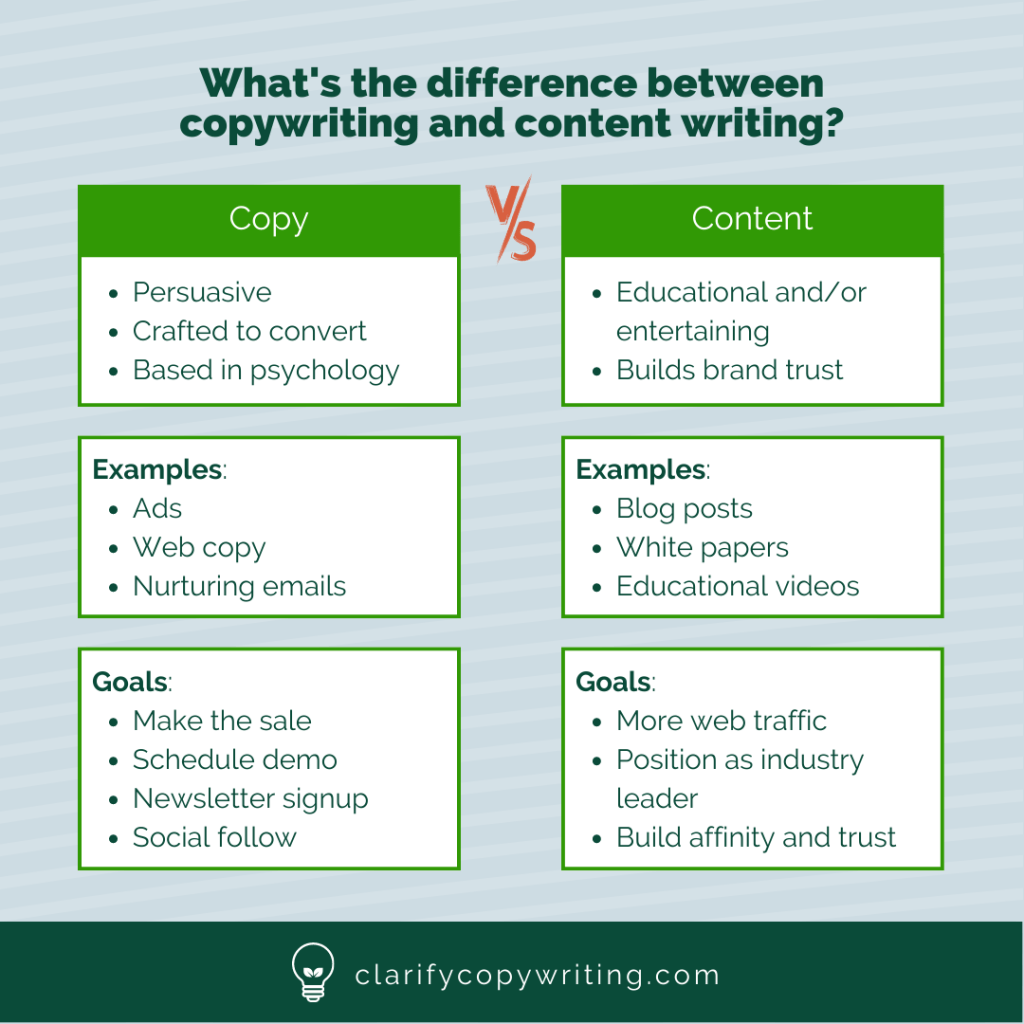
Copy is carefully crafted to get readers to take action. In marketing terms, think of that action as a conversion. Something the user does that has business value.
Examples of copy
- Making a purchase
- Scheduling a demo
- Signing up for your newsletter
- Referring someone
- Following your social channel
How can exceptional copy impact your sales?
When we think of copy, advertising is typically the first thing that comes to mind. Ads are an important part of your marketing strategy and are often seen as “high stakes” because of the dollars behind them. But other elements of your funnel can move the needle just as much as advertising. For this reason, it’s important to also get your copy right in places like:
- Website
- Landing pages
- Nurturing emails
- Video sales letters
Today’s savvy consumers realize that the conversion actions listed above have value to businesses. And they’re warier of marketing than ever. Effective copywriting uses psychological concepts to break through that skepticism.

What is content?
Content is less action-oriented than copy – but that doesn’t make it less valuable to your business. The goals of content are usually to educate, entertain, or both. Your piece of content might include a call to action, but it’s not the primary focus. Content exists in its own right, with fewer “strings attached.”
Examples of content
- Blog posts that answer their top questions
- Case studies that show how real customers use your product
- White papers with original insights
- Video scripts that teach and entertain
- Interactive content like quizzes
How does content serve your brand?
To be clear, though: content plays a vital role in your digital marketing plan. Generally part of top-funnel strategies, an excellent piece of content can:
- Bring more qualified traffic to your website with search engine optimization
- Position your brand as a voice of authority in your industry
- Increase customer affinity and retention
- Build consumer trust and clarity with your brand
Let’s face it, there are some B2C industries that convert cold traffic fairly well. Low-ticket retail, fashion, health supplements and the like rely heavily on copywriting because a consumer is more likely to see an ad and immediately make a purchase.
For B2B companies with longer sales cycles and nuanced decision-making, publishing high-quality, relevant content that shows your brand’s authority and credibility is crucial. Compelling content shows consumers you know what you’re doing – in fact, you’re the best.
How copy and content work together
Most brands use a combination of copywriting and content marketing to achieve their goals. They work together to form a strong content strategy. Build your brand with high-quality, authoritative content that speaks to your target audience. Then, keep them on the line and close the deal with the power of copywriting.
 Clarify | Copywriting and Content Strategy
One response to “Copy vs. content: What’s the difference and why does it matter?”
[…] Whether it’s signing up for a newsletter or a buying decision, these conversions are what copy is all about. Copy without a conversion goal is… well, it’s not copy at all. (Perhaps it’s content.) […]
LikeLike