“Hey, guys… whatcha up to?”
“Play peas, dada, play peas!”
My toddler and I were on the floor with a storage bin full of dry split peas. It was an idea I got from our local Parents as Teachers group. A sensory bin, it’s called.
A variety of wooden shapes were half-buried in the peas, and my two-year-old was having the time of his life hiding and rediscovering them.
“I found the star!”
My heart swelled. When did my kid learn what a star is?
The idea behind sensory activities is, to put it simply, that we learn better by doing. Sure, I can show my son the star in our book about shapes. But the lesson sticks better when he gets to unbury the star himself.
That’s exactly the idea behind emotional triggers in copywriting. You can tell people about your product or service all day long. But make them feel something when they’re learning about your brand, and the experience is far more memorable. And more effective.
Why use emotional triggers in copywriting?
The end goal of copywriting is to motivate readers to take an action. To “convert.”
Whether it’s signing up for a newsletter or a buying decision, these conversions are what copy is all about. Copy without a conversion goal is… well, it’s not copy at all. (Perhaps it’s content.)
But taking action is hard. Harder than, say, not taking action.
A copywriter’s job is to create content that makes a lasting impression and engages readers enough that they want to take that next step. We have the difficult task of shifting the reader’s perspective so they believe they have more to lose by not taking action.
That’s why triggering emotions is an essential copywriting skill.
Done right, emotional triggers will accomplish two main goals:
- Catch your audience’s attention. Your readers have focus to give, but they won’t give it lightly. Using psychological triggers early in your copy can capture that focus by creating a human connection.
- Leave a lasting impression. Memorability is everything in marketing, especially in B2B. By letting your audience feel an emotion, you’re cementing their experience with your brand in their minds. They’ll remember that much longer than any product features.

How to trigger an emotional response from your audience
To a savvy conversion rate optimizer, there’s nothing better than an indecisive customer. A potential customer who’s teetering on the fence and needs a little tap in the right direction.
The easiest way to achieve that tap is with emotional triggers.
Trust. Leadership. Fear. Money. All these ideas are shortcuts to capturing a prospect’s attention. This is your opportunity to make them feel special. What do they stand to gain by accepting your offer – or lose if they let it slip through their fingers?
You can trigger your customer’s most sensitive emotions by highlighting the benefit they’ll get by acting now. A discount, free shipping, and added bonuses are all examples of benefits you could call out.
For an extra increase in conversions, try limiting the time or quantity of the offer. If the phrase “Hurry! Offer ends soon” doesn’t get your heart pumping, I doubt you’re even human.
Here are a few types of content that are perfect avenues for emotional triggers.
- Titles, headlines, and calls to action
- Visual elements like photos and videos
- Social proof like testimonials
- Storytelling in intro copy
These are all excellent locations for emotional language. They catch your audience’s attention and set the stage for the rest of the copy.

Love/hate: Should my copy stir positive or negative emotions?
Have you heard of the wheel of emotion? No, it’s not that soap opera that comes on right after The Price is Right.
The wheel of emotion is an emotional development framework created by Tony Robbins. It can help copywriters understand why readers feel certain emotions – and how to use them to influence their behavior.
The wheel of emotion breaks emotions into seven categories:
- Curiosity
- Joy
- Surprise
- Desire
- Fear
- Anger
- Acceptance
By understanding the nuances of each emotion and how they’re interconnected, you can use psychological triggers to get the desired emotional response from your readers.
How do you figure out what that response is?
Almost always, your goal should be to evoke positive emotions like curiosity, excitement, and enthusiasm. These positive emotions can increase engagement and conversion rates.
This is partially due to selection bias. An audience that responds to positive emotional triggers converts higher, has more brand loyalty, and requests fewer returns and refunds.
But used strategically, negative emotions like fear or guilt can also be effective at driving people to take action. The emotion you try to elicit depends on the action you want the reader to take.
What are examples of emotional triggers?
Here’s an example of how different copy can trigger different emotions, and lead to different experiences for your prospects and customers.
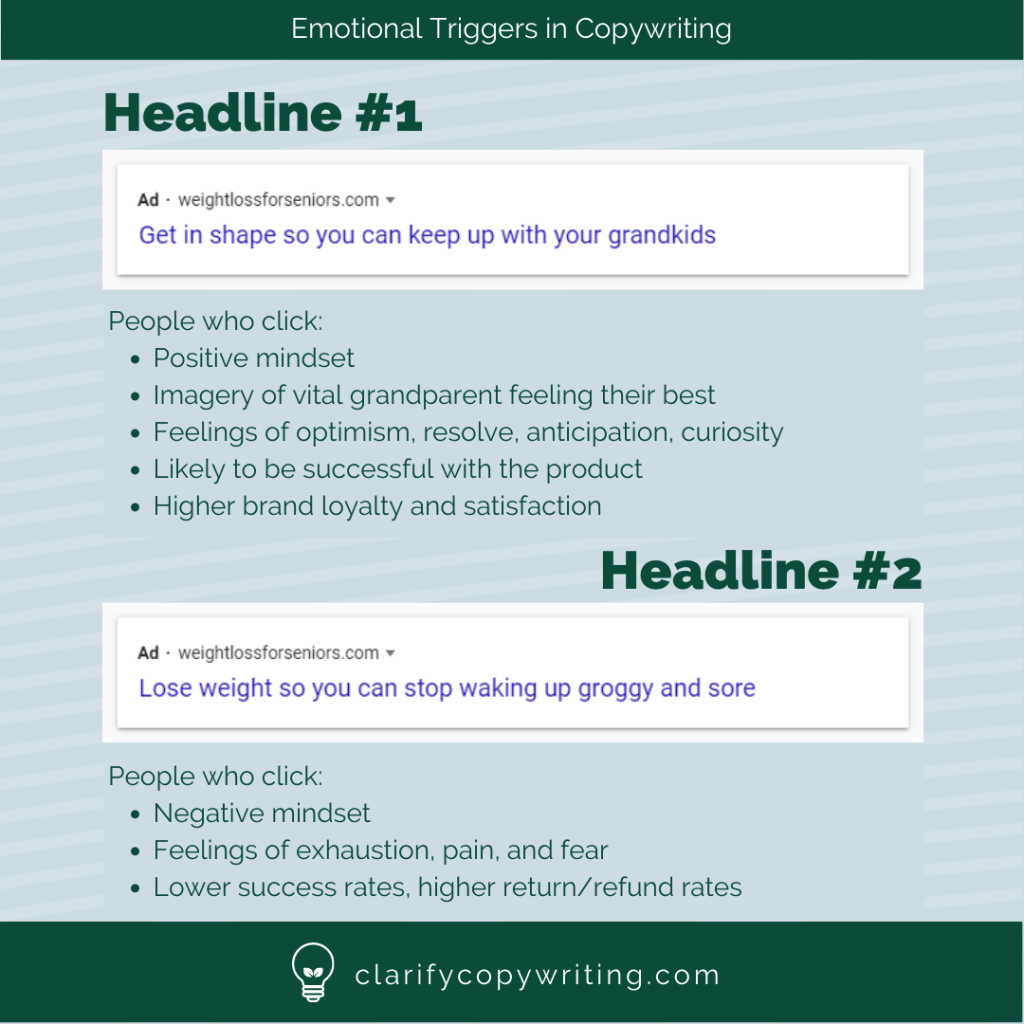
Consider two ad headlines:
#1: Get in shape so you can keep up with your grandkids
#2: Lose weight so you can stop waking up groggy and sore
These headlines could be selling the same weight loss product. But they’ll get a response from two very different groups of people.
People who click on the first headline are in a positive mindset. The copy conjures imagery of a happy, vital grandparent feeling better than they ever have. People who convert from this headline are more likely to have success with your product.
The emotional language in the first headline triggers feelings of optimism, resolve, anticipation, and curiosity. And those feelings set the foundation for the customer experience.
People who click the second headline are, in a word, struggling. They’re feeling rough, mentally and physically.
Note that the headline #1 crowd is also feeling rough. It’s the mindset that’s different between the two groups. The copy in the second headline doubles down on the audience’s feelings of exhaustion, pain, and fear.
Without the right motivation, these customers are unlikely to have a good experience with your product. It takes more than whatever you’re selling to shift their paradigm.
8 positive emotions to motivate and energize your readers
Here are some of the most common emotions to use in copywriting.
- Joy
- Trust
- Value
- Belonging
- Leadership
- Surprise
- Anticipation
- Instant gratification
6 negative emotions to spur your readers to action
These emotions skew toward the negative end of the spectrum, but can be effective when used wisely.
- Fear
- Guilt
- Disgust
- Sadness
- Competition
- Urgency
This is not an exhaustive list. You know your buyer personas better than anyone. Use your deep understanding of your target audience to focus your marketing materials on the most important emotions.
Emotional triggers: The magic fairy dust of copywriting
If you’ve ever wondered why some pieces of copy are more effective than others, the answer is probably emotional triggers. The best copywriters are subtle with their use of these triggers. (So, not at all like the weight loss headline examples I gave above.)
By understanding how different emotions affect purchasing decisions, you can craft a more compelling message that sticks with your readers and drives them toward conversion.
 Clarify | Copywriting and Content Strategy